Goddard Veterinary Nursing College (GVNC) endeavour to ensure that our learners and employers are aware of their rights to make a complaint or an appeal.
This process is embedded into our induction process and within learner contracts. Complaints or appeals are dealt with appropriate discretion and sensitively.
A complaint is defined as an oral or written expression of dissatisfaction. The person making the complaint may not necessarily refer to it as being a “complaint”, but it will still be treated as such where the above definition applies.
An appeal is defined as a request to reconsider a decision made e.g., assessment results.
Circumstances of a complaint or an appeal may include assessments, education provisions such as the curriculum, support, and resources, IQA moderation, examination results and college conduct.
We encourage complaints and appeals to be made in writing but also accept complaints and appeals face-to-face or verbally by telephone.
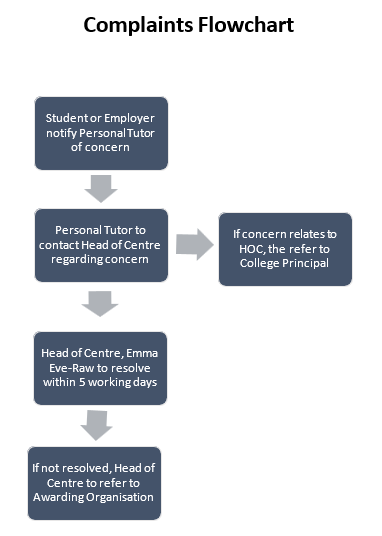
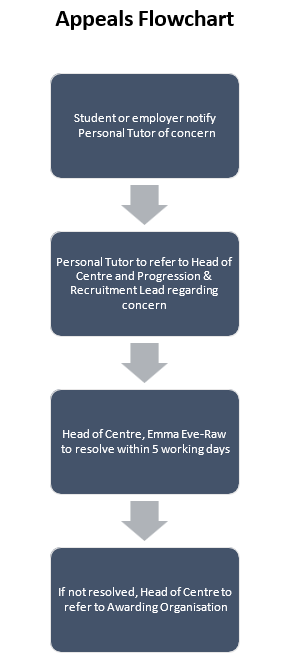
When a complaint or an appeal is made, we document the nature of the complaint or appeal and refer it to the Head of Centre.
Complaints are recorded, investigated and our KPI target is for complaints to be resolved within five working days.
In the Head of Centre’s absence or in the event that the complaint relates to the Head of
Centre, the complaint should be directed to the College Principal.
On receipt of a complaint every effort will be made to investigate and resolve the complaint within five working days. If the complaint cannot be resolved within five days, the complainant will be made awareof the reason why and what they can expect by way of a revised timescale.
Complaints are reviewed by the Head of Centre, who decides how best to investigate the complaint and who should be tasked with seeing the complaint through to resolution. This
will often be a lead tutor who will liaise with key parties (learner, employer, tutor, etc) with a view to determining an early resolution.
The Head of Centre will oversee any complaints or appeals made by a learner within the college provision with the College Principal overseeing any investigations as an impartial participant. Any complaint will be referred to the Governance Board as part of the internal process.
If the complaint cannot be resolved swiftly, the Head of Centre re-assumes responsibility and determines an alternative course of action.
In the event of a complaint being made against the Head of Centre, this will be referred to the College Principal, Thomas Flynn.
The Head of Centre reports all complaints, trends, and recurring issues to the Governance board. Where a preventable issue or trend is identified, the Governance board will identify and agree quality improvement changes to ensure the issues do not re-occur.
Examples of actions taken to prevent incidents resulting re-occurring, include:
- Additional staff training
- Increasing resources
- Changing processes and procedures
Employers and learners can also access this information via induction documents, employer guides and learning platforms such as Moodle and Teams.
College managers and other staff are given formal training on how to record, investigate and deal with complaints effectively. Where the outcome of a complaint is conveyed to the complainant and they remain unhappy, our procedure gives them a right of appeal.
Procedure for Lodging an Appeal
If the complainant is dissatisfied with the outcome, they should contact the Head of Centre within 14 days of the outcome of the complaint being communicated.
When lodging the appeal, the complainant should:
- Set out the basis for their appeal; and,
- submit any additional evidence/ documents to support their point of view
The Head of Centre will discuss the matter with both the learner, tutor, and other relevant parties prior to producing a written report on the appeal and clear recommendations.
At this point the appeal may be:
- dismissed (as the additional evidence presented or premise of the appeal is not sufficient)
- upheld
- referred to the College Principal for further consideration The outcome of the appeal will be confirmed in writing.
If a complainant, who is on any of our programmes remains dissatisfied after the appeal process and all internal processes have been exhausted, they have an ultimate right of appeal to the ESFA and the appropriate awarding body, which may be Lantra, CQ or VetSkill.
You should email complaints to complaints.esfa@education.gov.uk, or put them in a letter to:
Customer Service Team, Education and Skills Funding Agency Cheylesmore House Quinton Road Coventry CV1 2WT
All of our systems, processes and procedures are underpinned by our Learner Voice groups.
Our discussions with these groups allow us to gather and reflect on the feedback we receive. This leads to continuous improvements in our training and processes. These forums allow matters to be raised and addressed, long before they materialise as a complaint.
Our complaints processes and procedures are reviewed and updated annually by the Governance board.